

Give useful work a life beyond one project
Your next video may need a different story, but the publication steps can remain familiar. Your next browser game may have different rules, but parts of its build process can be useful again. A successful AI task often contains a capability worth keeping.
The new Toolchains feature in Agentlas Desktop gives that capability a home of its own. A Graph organizes a particular job. A Toolchain is an independent, callable capability that different jobs can share, with explicit inputs, expected outputs, and verified versions.
Ask Agentlas for the reusable capability in everyday language. The AI generalization agent works out what should vary, what should stay consistent, and whether a suitable Toolchain already exists. The result is a reusable design you can validate and call from future work.
What reusable AI Toolchains give you
The advantage is practical: future projects can use a defined capability instead of rebuilding the same procedure each time. You keep the freedom to change the surrounding task while reusing the part that already has a clear purpose.
- A faster starting point for recurring work: send new inputs to an existing capability instead of authoring its implementation again.
- Clearer handoffs: declared inputs and expected outputs tell the calling agent what to supply and what to check.
- A more organized library: reuse a suitable capability or improve its existing version history, rather than creating a new catalog item for every topic.
- Controlled improvements: a caller can select a verified version, keeping older pinned calls on the implementation they chose.
- Less manual setup: describe the reusable behavior in natural language and let the system agent propose its parameters and validation examples.
Graph vs Toolchain: the job and the capability
A Graph describes execution for a task: which steps run, how data moves between them, and what the job should produce. It can coordinate a specific video, a research assignment, or a game project. Its identity belongs to that execution plan.
A Toolchain has a separate identity. It describes a capability that callers can use with different inputs. A Graph can provide its implementation, or call a Toolchain as one step in a larger plan. Sharing an implementation does not make the task and the reusable asset the same object.
MCP tools belong inside this picture as tools the implementation can use. MCP provides callable tools; a Graph orchestrates the steps; a Toolchain packages reusable behavior. You can attach an MCP tool to a Graph without turning that MCP tool into the Graph.
This matters because saving a task is not enough to generalize it. If a workflow embeds one filename, account, or topic throughout its steps, another project may still need a rewrite. Generalization means deciding which details become inputs and which behavior remains stable.
Before and after: from a task copy to a reusable asset
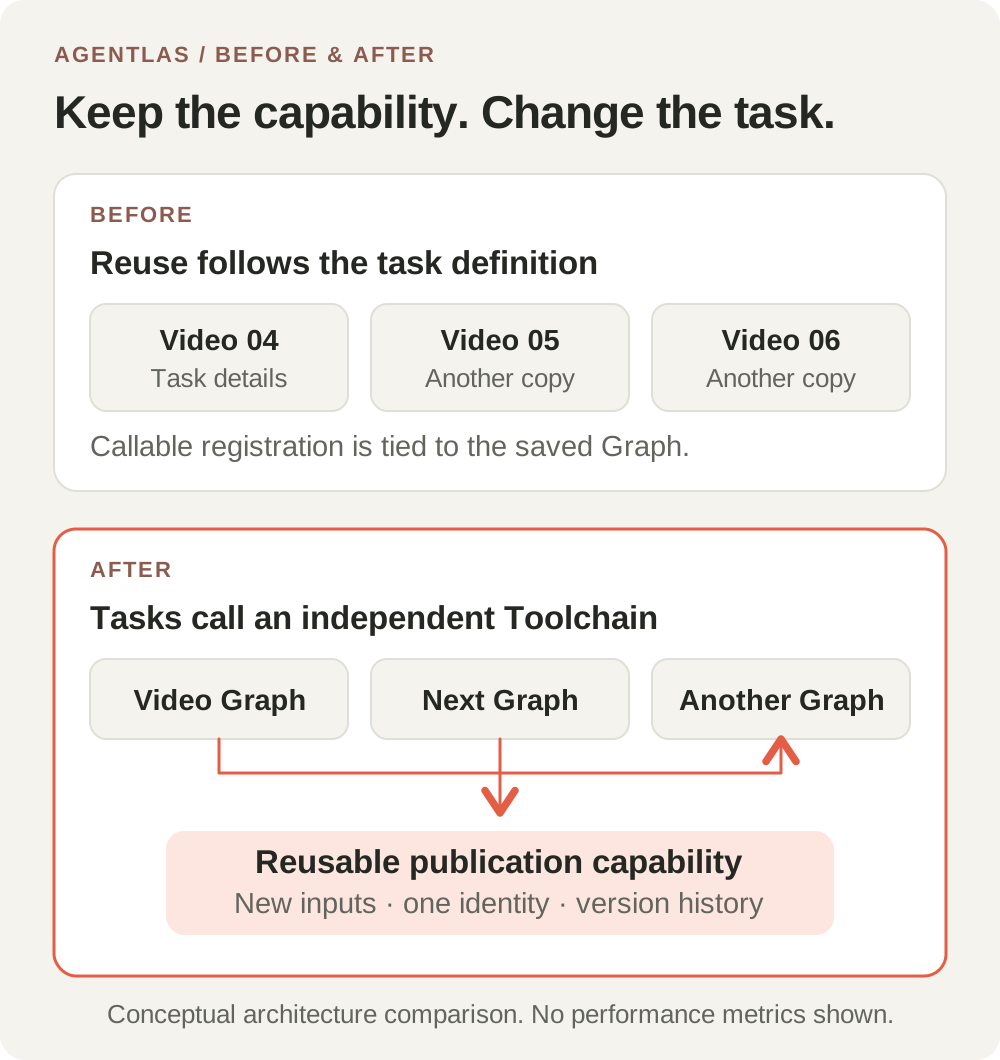
Previously, Graph records and callable registration were coupled. The new design separates a task's execution plan from the capability other tasks call. The comparison below describes that architectural change; it is not a performance benchmark.
| Question | Before: task-centered reuse | After: independent Toolchains |
|---|---|---|
| Identity | The saved Graph also carried callable registration | The capability has its own asset identity |
| New task | Start from a task-specific definition or copy | Call a suitable capability with new inputs |
| Generalization | Task details can remain embedded in the steps | AI proposes variable inputs and reusable behavior |
| Library growth | Topics and copies can become separate entries | Reuse, improve a version, or create a different capability |
| Improvements | Changes follow the task definition | Versions belong to one capability |
| Call selection | Use the task's definition | Select a verified version with a checked output |
Let AI design the reusable interface
You should not need to write a parameter specification before explaining what you want. A request such as “Create a reusable capability for preparing video publication packages” gives the system agent the starting point.
The agent proposes the inputs, expected outputs, and reusable implementation. It also designs varied examples with expected results: what changes between requests, and what should hold across them. Agentlas checks the proposed structure before saving a draft, and example validation must pass before a version becomes callable.
For a text routine, inputs might include the source text and formatting options. For a calculation, they might be numbers or structured data. A publication capability may need content references, a destination, and metadata. The interface should describe the behavior you need again, rather than hardcoding the first example.
Natural-language authoring gets you started; validation makes the saved version usable. A convincing description alone is not a verified implementation.
Reuse first, improve next, create when needed
A reusable library should become more useful as it grows, not harder to navigate. Before creating a capability, the generalization agent compares the request with the existing catalog.
If an existing saved version fits, it can be reused. If the behavior needs an improvement within the same scope, the agent can propose a new version of that asset. If the request describes materially different behavior, it can propose a new asset.
That keeps “video publication, version 1” and “video publication, version 2” within one capability's history. A new video title or topic is an input, not a reason on its own to create another Toolchain. The comparison considers behavior and inputs, rather than treating matching titles as proof that two capabilities are equivalent.
Catalog comparison and application checks help reduce duplicates. Deciding whether a change is an improvement or a different capability still requires a meaningful design judgment.
Toolchain architecture: one asset, several callers
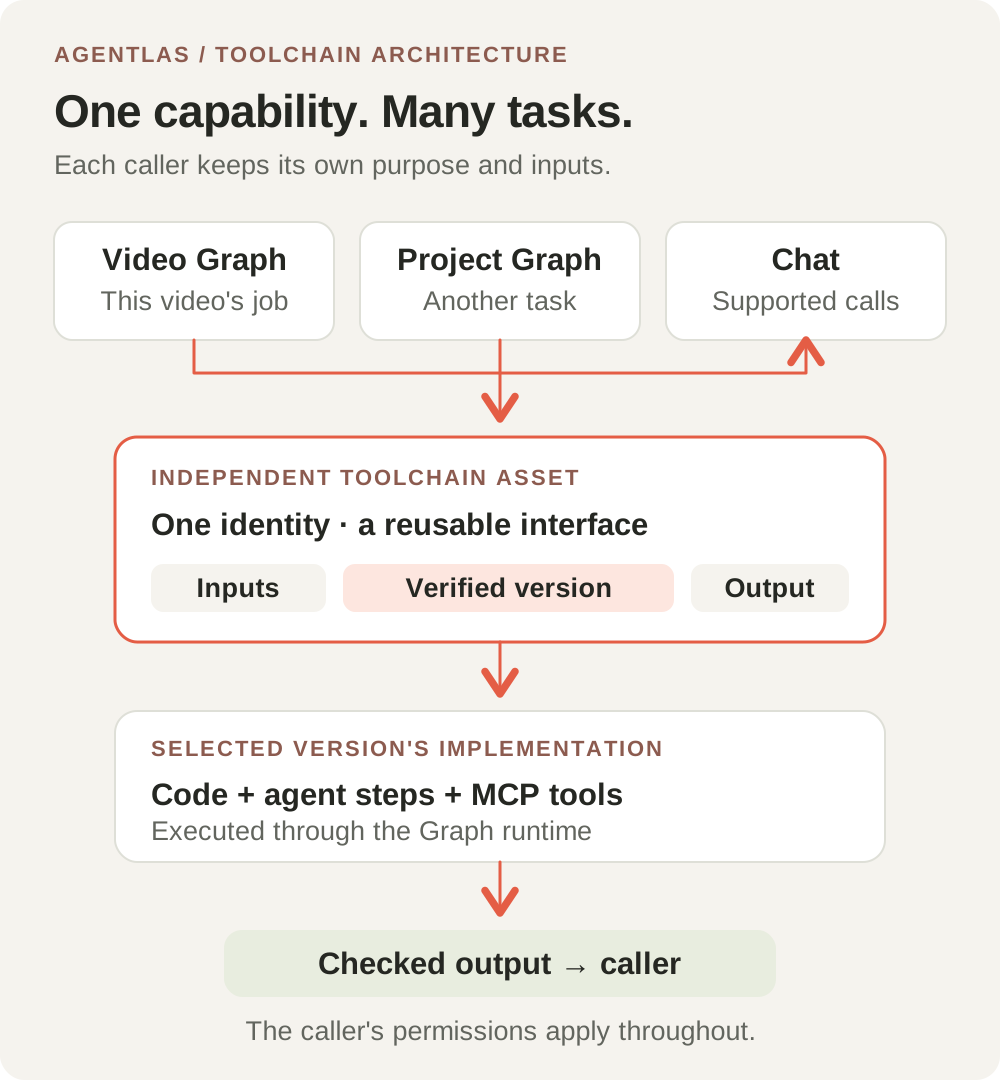
A video project, another task Graph, and a supported chat can call the same independent Toolchain. They supply their own inputs and choose a verified version. That version executes its saved implementation and checks that its result matches the declared output structure.
The implementation can combine code, agent steps, and MCP tools through the Graph runtime. The surrounding Graph continues to manage the current job. The Toolchain keeps the reusable interface and version history.
A pinned version keeps its saved implementation even when a newer version is added. Toolchain calls also respect the caller's read/write execution permissions. Saving a reusable capability does not expand that execution permission.
For work that affects an external service, the implementation must still check the actual destination. A valid returned result and a confirmed publication are different pieces of evidence.
From YouTube 04 to a video publication capability
Here are two conceptual examples of the distinction. They illustrate how to design reusable behavior; they are not built-in templates or reports of completed publications and games.
A Graph called “YouTube 04” might organize one domino video: its concept, script, media, and delivery. A reusable video publication Toolchain would instead accept content and publication details as inputs, with a defined result for the caller to check.
The next video could call that same capability while using a completely different research and production Graph. If the publication behavior improves, the Toolchain gains a version under the same asset identity. The video topic stays with the task; the repeatable capability stays in the library.
From chess to a web-game build process
A chess project may expose reusable work in building and delivering a browser game. The useful question is which parts support more than chess: accepting a game specification, assembling the project, checking a build, or preparing the output.
If an implementation supports those varying specifications, a different game can reuse it. If it only contains chess-specific logic, renaming it “Web Game Builder” does not make it general-purpose. The scope must follow the behavior and examples, not the ambition of its title.
A specific game remains a task Graph. The reusable build process becomes a separate capability when its implementation and validation support that scope.
Is a Toolchain just another name for a Graph?
No. A Graph organizes execution for a task. A Toolchain is a separate callable asset with inputs, expected outputs, and versions. A Graph can implement a Toolchain or call one as a step.
Will every completed Graph become a Toolchain?
No. Generalization happens when a reusable Toolchain is requested. Existing one-off Graphs remain Graphs; this update does not bulk-migrate them. Completing a Graph does not automatically create a capability.
Can a new version change an older pinned call?
A pinned call selects its specified version. An improvement adds a version to the same asset; it does not replace the saved implementation an older pin selected. Callers can explicitly choose an appropriate verified version.
Bring reusable capabilities into your next project
Open Agentlas Desktop and describe the capability you expect to use again. Let the AI propose its reusable design, inspect the inputs and examples, validate a version, and call it from a Graph or supported chat.
Keep your Graph focused on the current job. Give the useful behavior its own interface and identity, so the next project has something concrete to reuse.