

Slash command in command-capable hosts; installed skill in current Codex.
AGENTLAS MODEL 01 · AGENT OS
HEPHAESTUS
Agent OS inside Agentlas
Open Agent OS for Agentlas-native work and external LLM hosts.
Agentlas Terminal and the Agentlas app work from plain language. Command-capable hosts expose /hep-* commands; current Codex exposes installed $hephaestus-* skills and typed MCP.
Form a temporary TF through the entrypoint your host actually exposes.
Use agents saved in your Cloud through the exact owner-scoped surface.
Use /hep-* where supported; current Codex uses typed MCP for search/call and $hephaestus-upload.
curl -fsSL https://raw.githubusercontent.com/agentlas-ai/Agentlas-OS/main/scripts/install-all-runtimes.sh | bashMeta-agent builderBriefing Interview EngineA2A Hub routingStormbreaker gatesLocal ontology (FTS5 + GraphRAG)Memory + security gatesApache-2.0, open sourcePatent-pending routing
Hephaestus is not a prompt generator. It is an operating layer for agents that have to build, route, verify, remember, and evolve inside real developer workspaces.
“An agent OS is the control plane around what agents may build, call, remember, and ship.”HOW THE ENGINE WORKS
Five operating layers for developer-owned agents.
Hephaestus combines a meta-agent builder, A2A routing, Stormbreaker, local ontology, and governed memory/security gates so agent creation becomes an inspectable operating system instead of a one-off prompt.
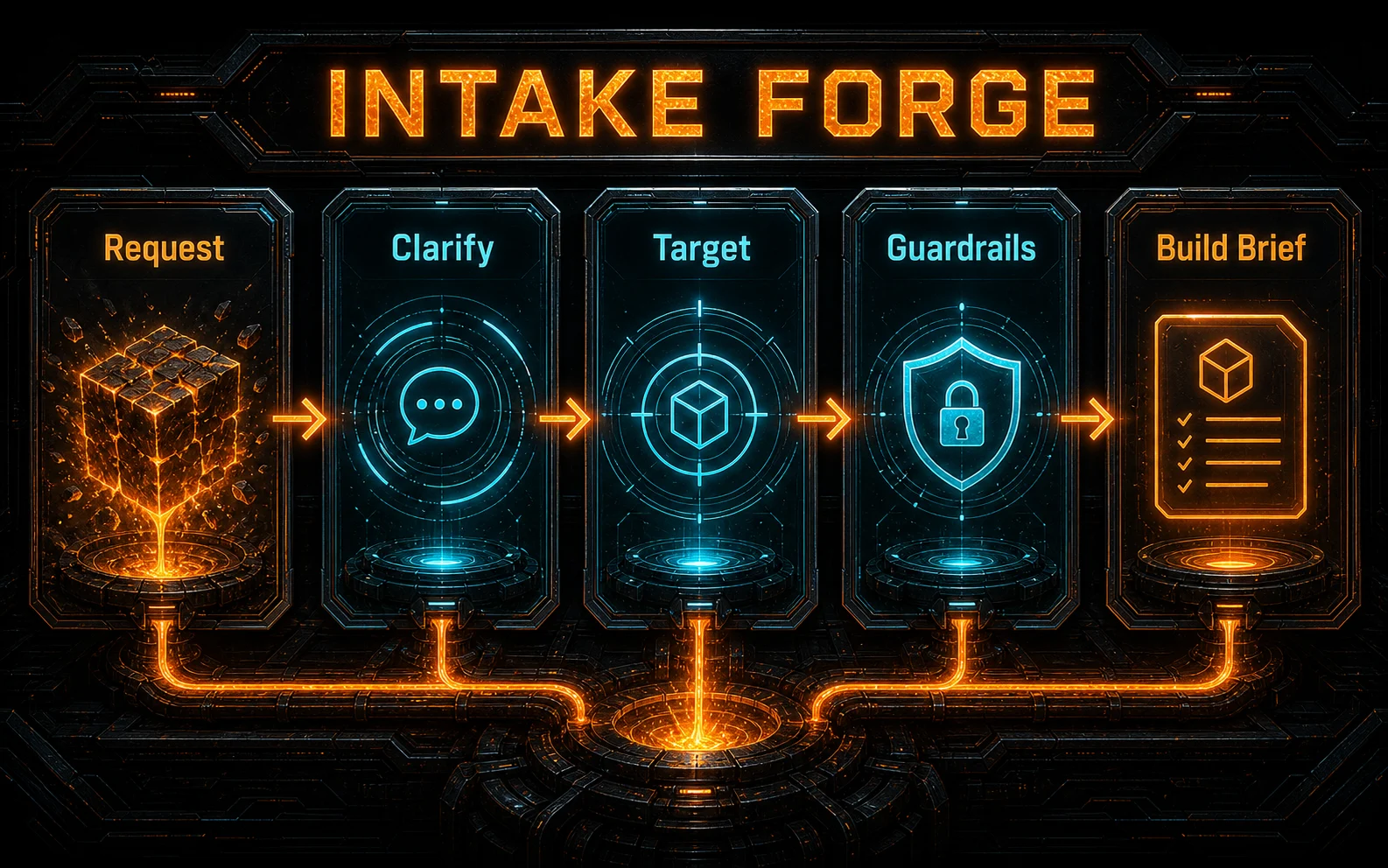
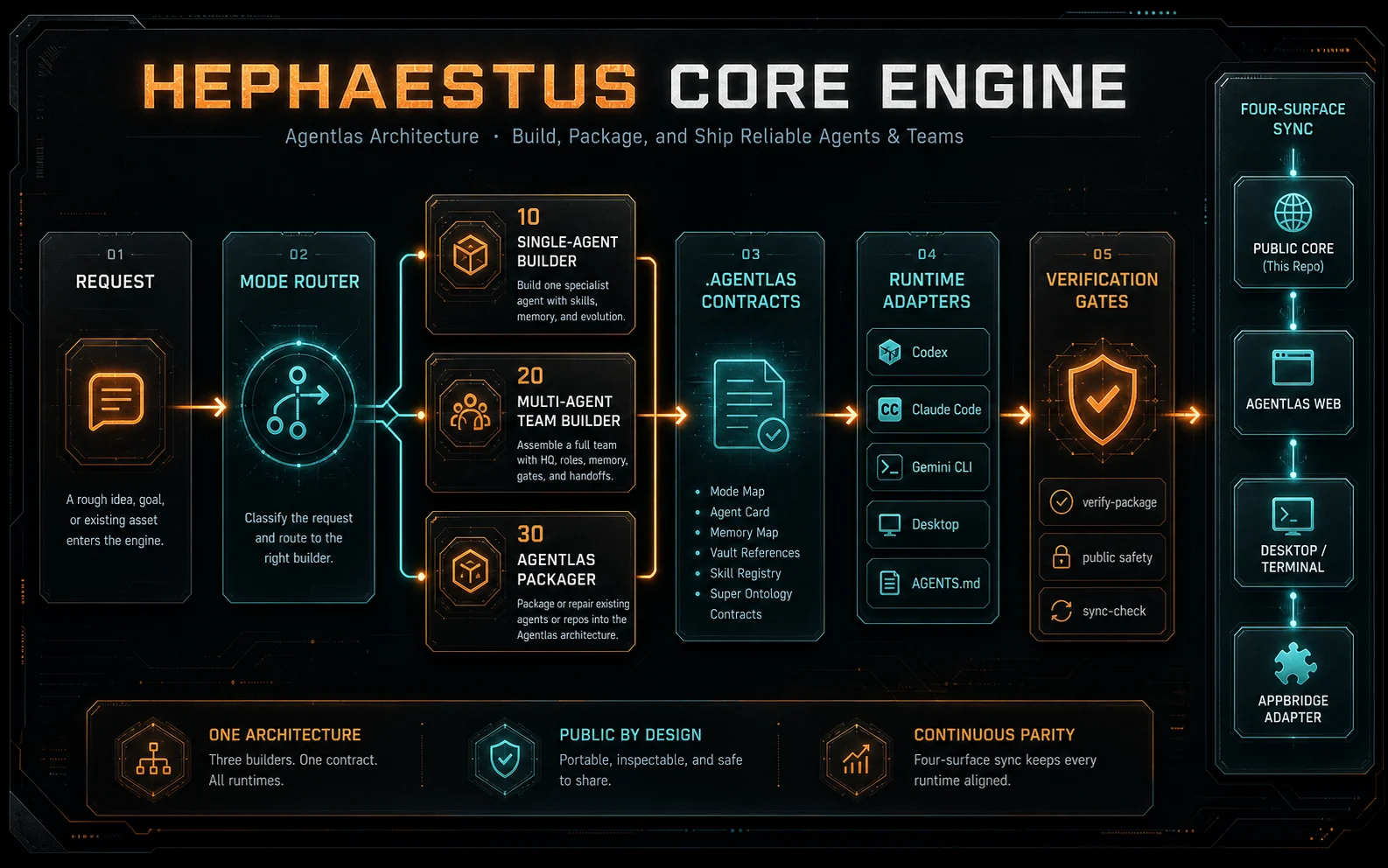
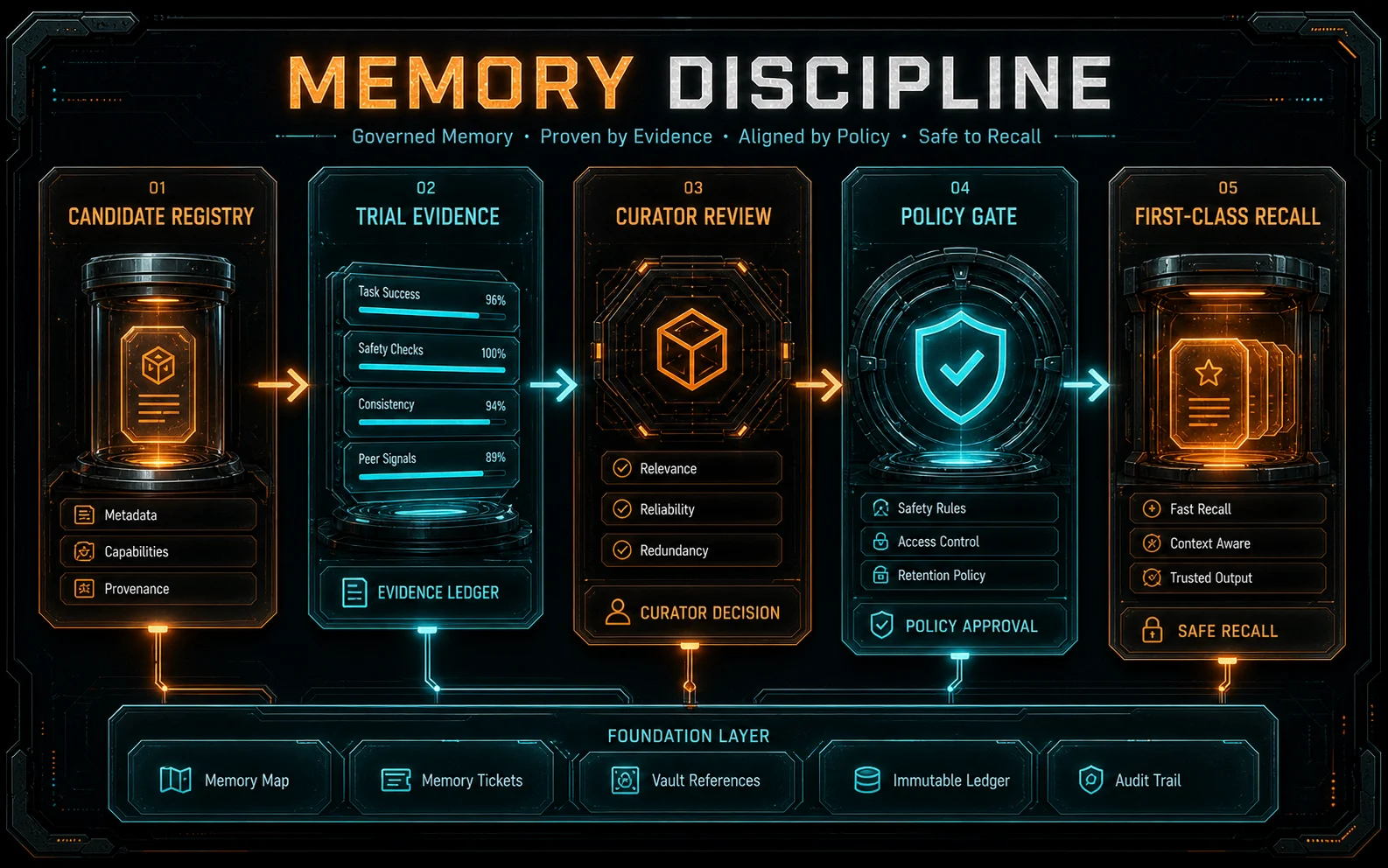
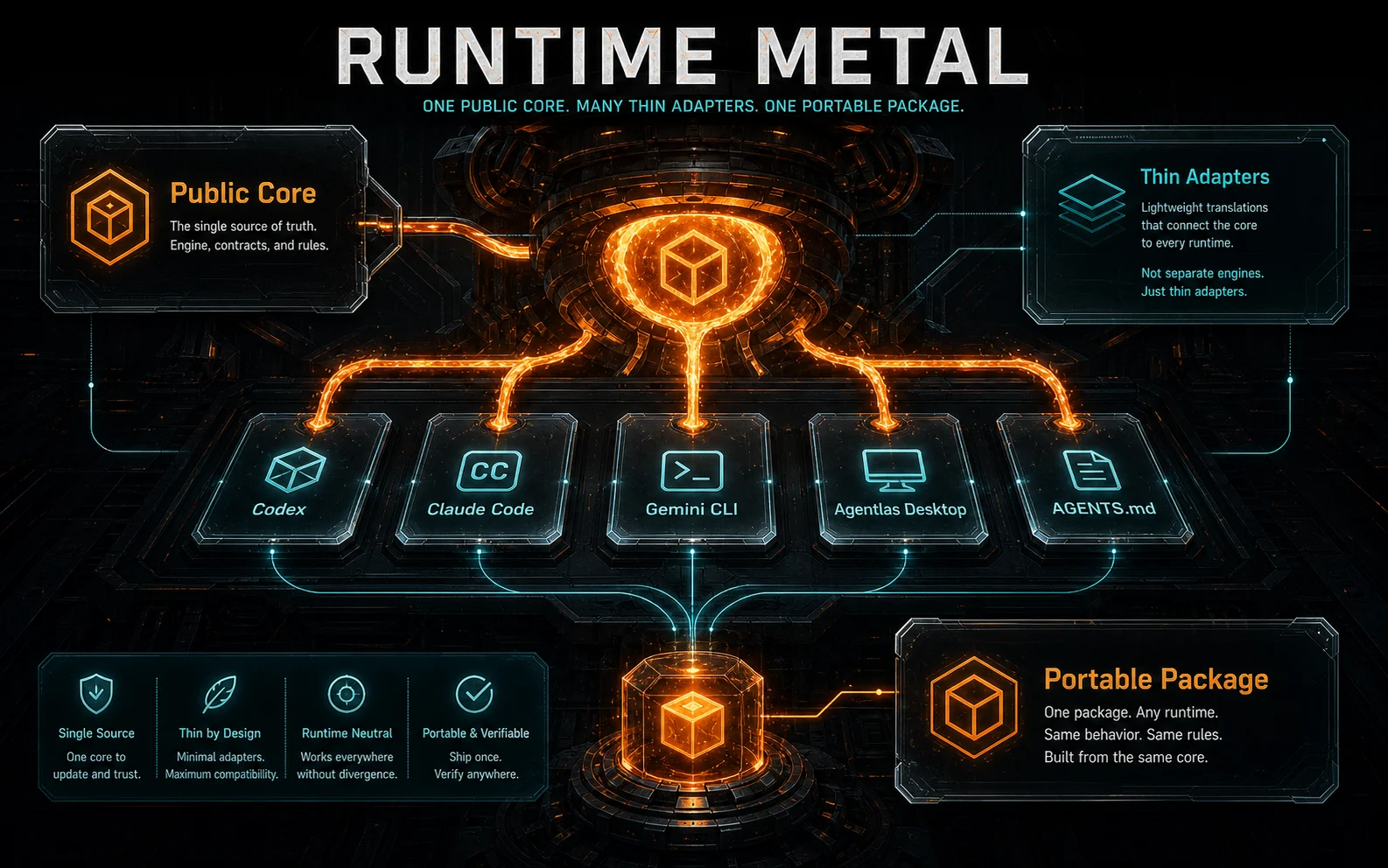
01 · Meta-agent builderintent → Work Brief → agent architecture
Turn intent into an agent architecture.
Hephaestus classifies the request, runs the Briefing Interview Engine's quantitative ambiguity assessment to produce a scored Work Brief, then emits the right shape: one agent, a multi-agent team, or a clean package with runtime adapters.
Route work across local agents and the Hub.
Hephaestus Network reads routing cards, prefers local agents, falls back to Agentlas Hub with redacted keywords when allowed, and writes receipts so every agent-to-agent handoff is traceable.
Give agents a working map of the project.
The ontology runtime indexes approved project sources into local graph and search state — FTS5 full-text search, GraphRAG retrieval, and CJK document parsing — so agents can query context, memory, and source lineage without sweeping unrelated folders.
Make serious agent work auditable.
Stormbreaker adds scope locks, failure-memory checks, verifier-first plans, bounded evidence loops, review gates, outcome ledgers, and final proof before substantial work can be called done.
Let agents evolve under control.
Memory admission, skill trials, security scans, and verification gates decide what an agent is allowed to keep, learn, call, or publish across Claude Code, Codex, Gemini CLI, Agentlas Desktop, and AGENTS.md.
WHAT'S INSIDE
The agent OS, exposed as files, gates, and receipts.
Works with Claude
Connect the Hub routing and workforce surface to Claude over MCP — search agents, resolve exact releases, and staff a workforce with free Hub agent access
Connector referenceMeta-agent builder
Classifies the request and builds the right agent, team, or package shape
Briefing Interview Engine
Quantitative ambiguity assessment (v1.1.0) that scores the request into a Work Brief before compilation
A2A Hub router (Network 2.0 Scheduler)
Routes requests through local cards first, then approved Agentlas Hub fallback, with verified / unverified / blocked receipts
Stormbreaker
Hardens execution with scope locks, failure memory, verifier-first plans, and final proof
Ontology runtime
FTS5 search + GraphRAG retrieval + CJK document parsing over approved project sources, local graph, and source-lineage context
Memory and self-evolution
Controls which memories, skills, and habits agents are allowed to keep
Security and release gates
Runs scans, verification, and publish checks before anything ships
STORMBREAKER RESULTS
Operational stability, shown as a control layer.
Stormbreaker is not a model replacement. It wraps the coding agent with scope locks, failure memory, verifier-first planning, evidence loops, review gates, and final proof so the run is harder to abandon halfway through.
Macro operational stability99.26
Macro operational stability
- GPT 5.5
- 76.48
- Network
- 92.22
- Stormbreaker
- 99.26
Micro operational stability
- GPT 5.5
- 76.67
- Network
- 91.85
- Stormbreaker
- 98.52
Holdout stability
- GPT 5.5
- 80.00
- Network
- 91.67
- Stormbreaker
- 100.00
Stress stability
- GPT 5.5
- 73.33
- Network
- 93.33
- Stormbreaker
- 100.00
- 01Scope lock
- 02Failure memory
- 03Verifier-first plan
- 04Evidence loop
- 05Review gate
- 06Final proof
WHY IT MATTERS
What makes it useful is control over the agent lifecycle.
Architecture is visible
Agents, skills, memory contracts, and runtime adapters stay in plain files you can inspect, review, and change.
Routing is accountable
Agent-to-agent routing uses cards, approval boundaries, and receipts instead of silent black-box handoffs.
Execution is hardened
Stormbreaker turns scope, verification, failures, review, and final evidence into an operating contract.
Memory is governed
Project context is admitted through local ontology and memory rules, not by letting agents wander through every folder.
Evolution has gates
New skills, durable memory, and publishable packages have to pass trials, security scans, and verification before they stick.
VISION
An Agent OS for local-first AI work.
Agentlas is not only about creating agents. Hephaestus keeps the agent architecture, A2A routing, Stormbreaker execution gates, ontology, memory, and safety gates in plain structures you can inspect, change, and run on GitHub and on your own computer.
It's a host substrate, not an agent-writing library like CrewAI or LangChain: Hephaestus specifies, packages, routes, runs, audits, and migrates agents across workspace runtimes. Apache-2.0 licensed, public on GitHub — nothing about the pipeline is a closed API. Its multi-runtime routing (routing cards plus non-identifying routing receipts) and gated memory-promotion mechanism are covered by a filed, pending patent application.
See the public code on GitHub